
Teeth whitening kits can genuinely lighten many everyday stains, and the ones sold legally to the public are generally considered safe when used as directed. That said, home kits work more gradually and less dramatically than treatment carried out by a dentist, largely because the whitening agents available over the counter are far milder. For anyone in the UK or Ireland, the safest approach is to have a dental check-up first, then choose a kit — or a dentist-supervised option — with professional guidance.
What is a teeth whitening kit?
A teeth whitening kit is a home-use product designed to lighten the colour of your teeth. Most rely on a bleaching agent — usually hydrogen peroxide or carbamide peroxide — or on mild abrasives and surface-active ingredients that lift stains rather than bleach them.
Kits come in several formats, and they don’t all work the same way:
- Whitening strips: thin, flexible strips coated with a peroxide gel that you press against your teeth.
- Tray-based gels: a mouth tray (either one-size or moulded) filled with gel and worn for a set period.
- Whitening pens: a brush-on gel for spot treatment and touch-ups.
- LED kits: a tray or mouthpiece paired with a light that is marketed to speed up the gel’s action.
- Whitening toothpastes: mildly abrasive pastes that remove surface stains but do not change the underlying tooth shade.
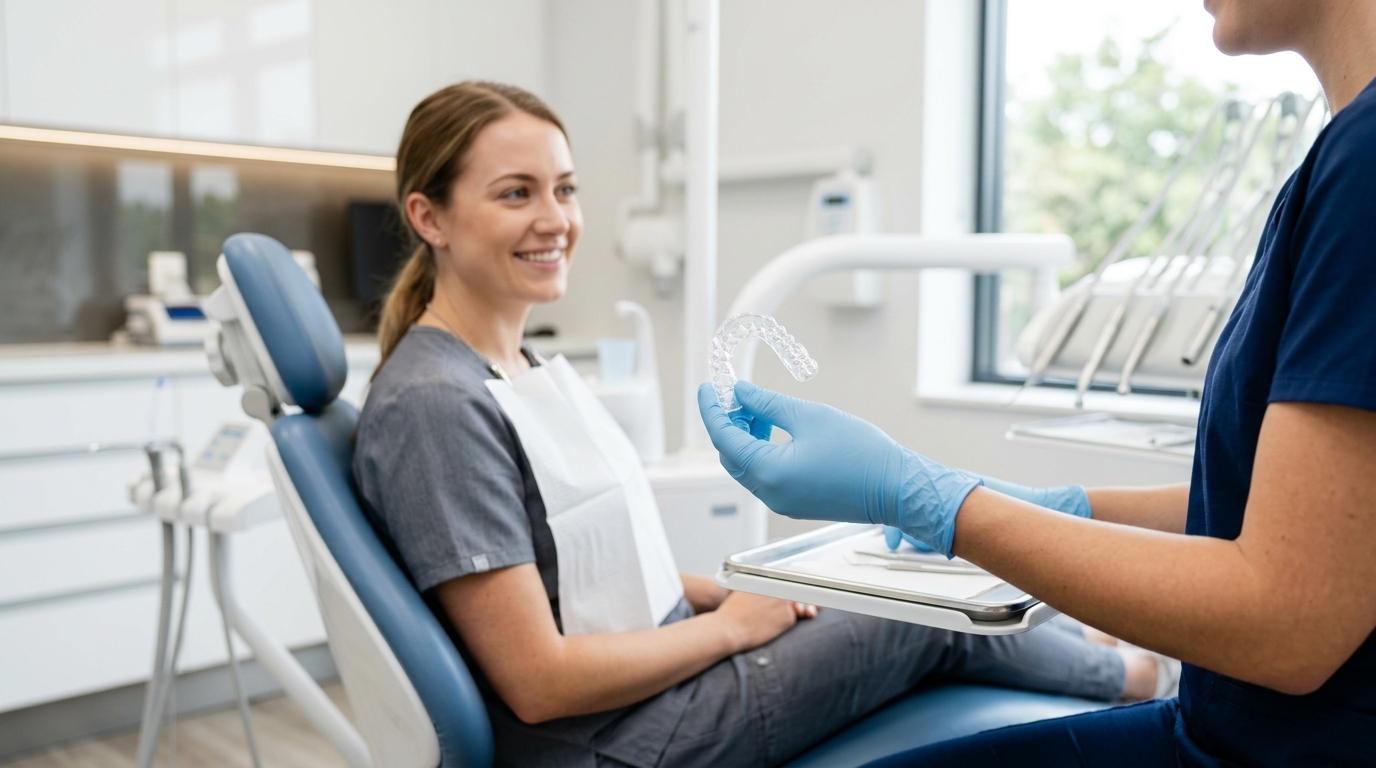
Do teeth whitening kits actually work?
For many people, yes — within limits. Peroxide-based kits can reduce yellowing and lift stains caused by coffee, tea, red wine and smoking. Results tend to be subtle and build up over days or weeks of consistent use.
How well a kit works depends on several things:
- The type of stain: surface (extrinsic) stains respond best. Deeper (intrinsic) discolouration — from ageing, certain medications or trauma — is far harder to shift.
- The strength of the agent: legal over-the-counter kits are deliberately mild, so they lighten slowly.
- Consistency: following the routine over the full recommended period matters more than any single session.
- Your starting shade: naturally yellow teeth often respond better than greyish tones.
It’s also worth knowing what kits cannot do. They won’t whiten crowns, veneers, fillings or bridges, which keep their original colour. If your front teeth have restorations, home whitening can leave them looking mismatched — one reason a professional assessment matters.
Setting realistic expectations helps. A good home kit can make teeth look fresher and a shade or two brighter, which many people are happy with. What it usually won’t deliver is the striking, uniform change seen in edited photographs — and results that look too dramatic to be true often point to a product that isn’t safe or legal.
Are teeth whitening kits safe?
Used sensibly, legally sold kits are considered safe for most healthy adults. The most common side effects are temporary and mild:
- Tooth sensitivity, especially to cold, which usually settles within a few days.
- Gum irritation, often caused by gel overflowing an ill-fitting tray or strip.
- Uneven results if the product doesn’t sit evenly against the teeth.
Problems are more likely with poorly regulated products bought from unverified online sellers, which may contain far higher peroxide concentrations than the law allows. Overusing any kit — going beyond the recommended time or frequency — can also aggravate sensitivity and irritate the gums. Whitening does not harm tooth enamel when products are used as intended, but misuse can. If you ever notice lasting pain, bleeding gums or white patches, stop and contact your dentist.
What does the law say about whitening in the UK and Ireland?
This is where home kits and professional treatment part ways. Across the UK and Ireland, tooth whitening is regulated:
- Products sold directly to the public may contain no more than 0.1% hydrogen peroxide (or the equivalent).
- Higher-strength whitening — up to 6% hydrogen peroxide — can legally be provided only by, or under the supervision of, a registered dental professional.
- Whitening carried out by beauty salons or non-dental “technicians” is illegal.
In practice, this means the strongest legal results come from treatment your dentist prescribes — often custom trays and gel you use at home under their supervision, or in-clinic whitening. It’s a helpful rule of thumb: if a product promises dramatic change with no dental involvement at all, treat that promise with caution.
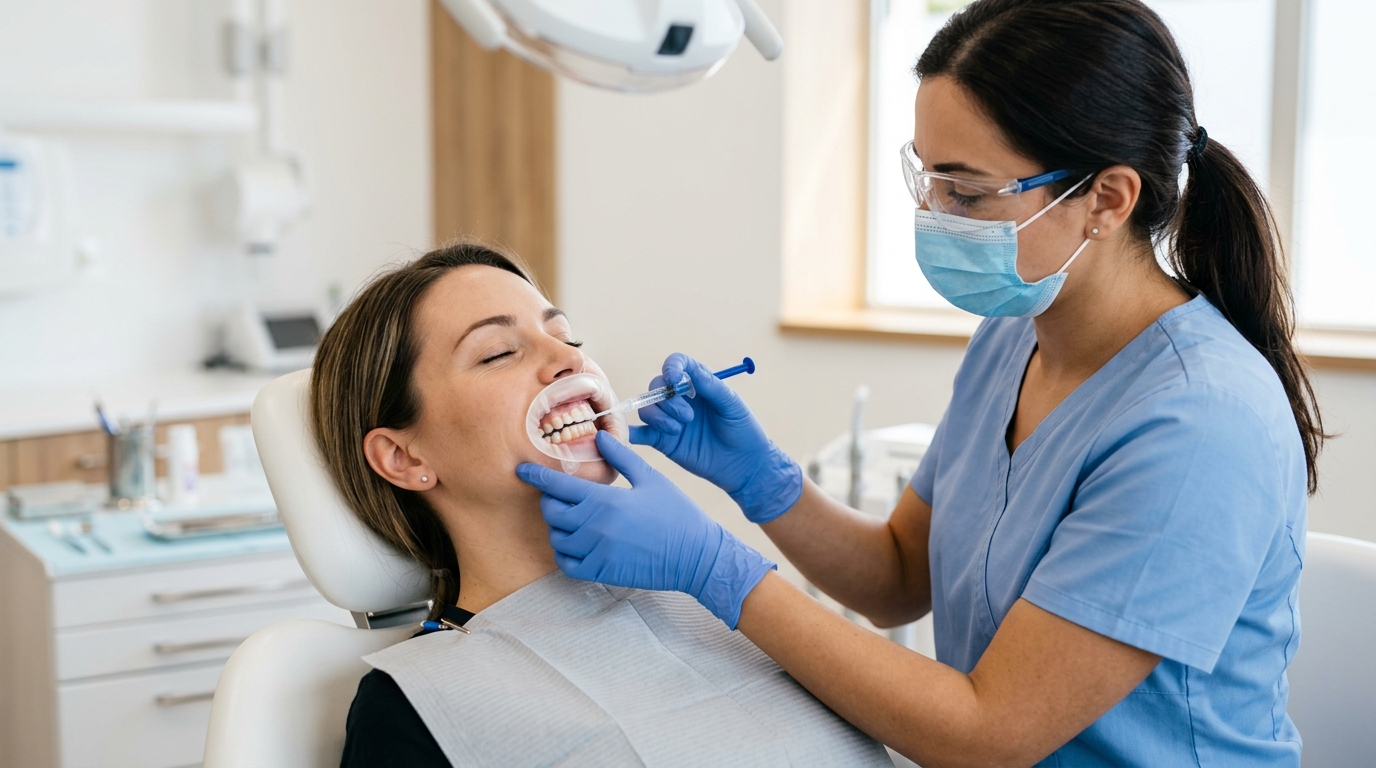
Home whitening kits vs professional whitening: what’s the difference?
Both aim to lighten your teeth, but they differ in strength, precision and oversight.
Home kits
- Convenient and used on your own schedule.
- Mild agents, so change is gradual and modest.
- One-size trays or strips may not fit every mouth evenly.
- No professional check for the underlying cause of discolouration.
Dentist-led whitening
- Begins with an examination to confirm your teeth and gums are healthy.
- Uses professionally prescribed agents for more noticeable results.
- Custom-made trays distribute gel evenly and help protect the gums.
- Sensitivity and existing restorations are managed as part of the plan.
Many patients find a combined approach works well: a dentist confirms whitening is suitable, then supervises safe at-home treatment. If discolouration is stubborn or tied to restorations, options such as veneers may be discussed as part of a wider smile design.
Who should think twice before using a whitening kit?
Whitening isn’t right for everyone, and some situations call for a dentist’s advice first:
- People with untreated tooth decay, gum disease or exposed tooth roots.
- Those with cracked teeth, worn enamel or leaking fillings.
- Anyone with visible crowns or veneers on the front teeth.
- Pregnant or breastfeeding women, who are usually advised to wait.
- Children and teenagers, whose teeth are still developing.
Whitening a mouth with underlying problems can worsen sensitivity or mask an issue that needs treatment. A quick check-up rules these out before you start.
How do you use a teeth whitening kit sensibly?
If you and your dentist agree a home kit is suitable, a few habits help you get comfortable, even results:
- Start with a dental check-up so any decay or gum issues are treated first.
- Follow the instructions exactly — more gel or longer wear time won’t whiten faster, but will raise sensitivity.
- Wipe away any excess gel to keep it off your gums.
- Use a sensitivity toothpaste before and during treatment if your teeth react.
- Ease off if sensitivity builds and let your teeth recover.
- Maintain results by cutting back on staining foods and drinks and keeping up good oral hygiene.
Above all, treat whitening as one part of caring for your smile rather than a quick fix. If results plateau or you’re unsure, your dentist can explain professional teeth whitening options and whether they suit your teeth.
Frequently Asked Questions
Do teeth whitening kits damage tooth enamel?
Used as directed, legally sold kits are not known to damage enamel. Sensitivity and gum irritation can occur but are usually temporary. Overuse, or products with unsafe peroxide levels, carries more risk — which is why professional guidance helps.
How long do results from a whitening kit last?
It varies from person to person. Results often last several months, but staining foods, drinks and smoking can shorten this. Occasional maintenance and good oral hygiene help results last longer.
Are LED whitening kits better than strips?
There’s limited strong evidence that the light itself adds much beyond the gel. The whitening comes mainly from the peroxide agent. If in doubt, ask your dentist which format suits your teeth.
Can I whiten my teeth if I have veneers or crowns?
Whitening agents don’t change the colour of veneers, crowns or fillings, so these can end up looking different from whitened natural teeth. If you have restorations on show, speak to your dentist before whitening.
Why do my teeth feel sensitive after using a whitening kit?
Whitening agents can briefly make teeth more reactive to hot and cold. This is common and usually eases within a few days. A sensitivity toothpaste and a short break often help; persistent pain deserves a dental check.
Are home whitening kits as good as professional whitening?
Home kits can freshen your smile, but they use much milder agents than dentist-led whitening, so results are gentler. For more noticeable or even change, professional treatment is generally more effective and better supervised.