“Turkey teeth” is a colloquial nickname — not a clinical diagnosis — for a heavily reshaped smile in which the natural teeth are filed down and covered with multiple crowns, often marketed loosely as “veneers.” The phrase spread through social media and reality television, and it usually signals over-aggressive treatment rather than one specific procedure or an entire country. Knowing the difference between minimally invasive cosmetic dentistry and full-coverage crowns is the single most important step in protecting your long-term oral health.
What does “turkey teeth” actually mean?
Despite the name, “turkey teeth” is not a recognised dental term and does not appear in any textbook. In the UK and Ireland it has become shorthand for a very white, very uniform set of teeth achieved by reducing healthy natural teeth to small “pegs” and fitting a row of crowns on top.
The controversy is rarely about the country itself. Skilled, ethical dentistry is practised in Turkey and across the world. The real concern is a treatment style: removing large amounts of healthy tooth structure for a purely cosmetic result, sometimes without fully explaining the lifelong consequences to the patient.
Why did the term become so popular?
Several trends collided at once:
- Reality TV personalities and influencers showcasing dramatic, ultra-white smiles.
- Short social-media videos showing teeth filed to points, often shared as cautionary tales.
- A growing interest in travelling abroad to combine dental treatment with a holiday.
As these clips circulated, “turkey teeth” became a catch-all label for any smile makeover that looked unnaturally opaque or that involved heavy drilling of otherwise sound teeth.
Are “turkey teeth” the same as veneers?
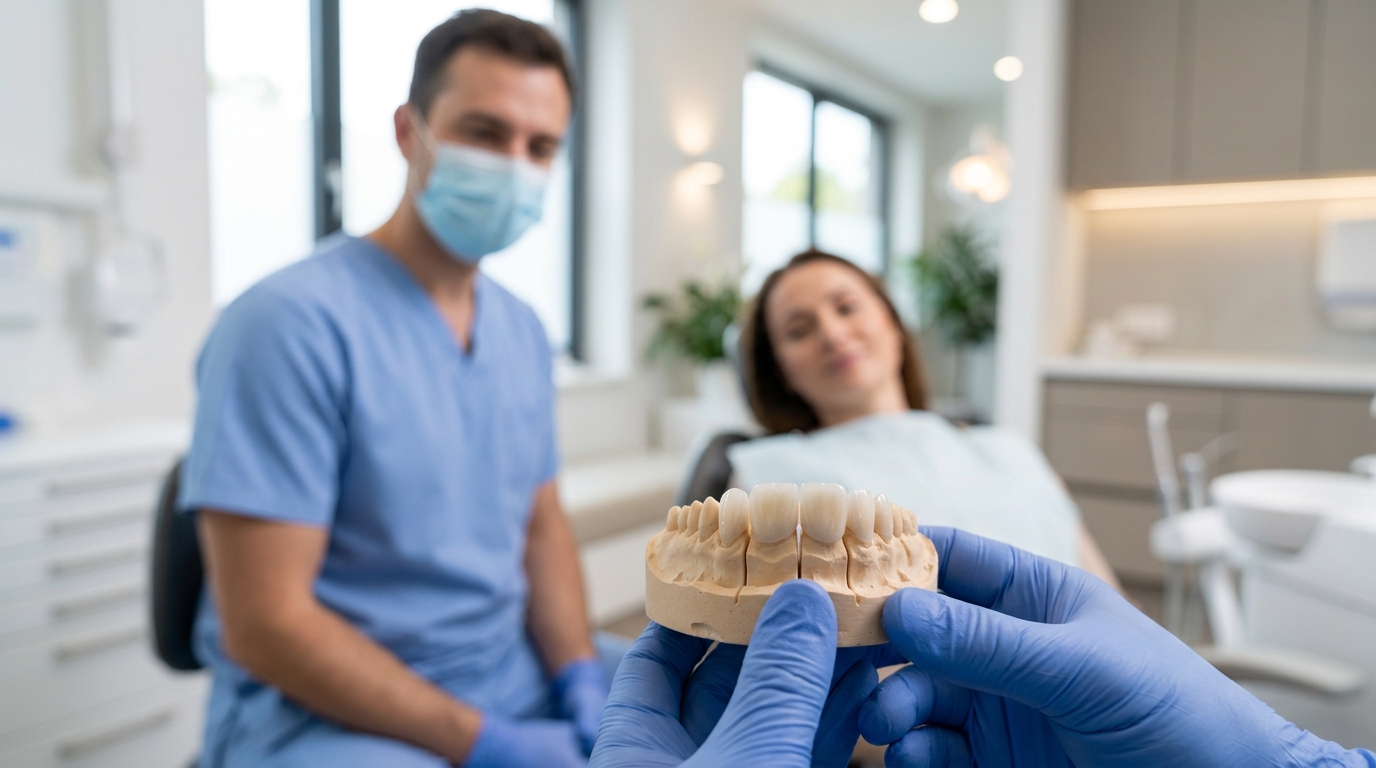
This is the most important, and most misunderstood, distinction. A genuine porcelain veneer and a crown are different treatments with very different consequences for your natural teeth.
- Veneers are thin shells bonded to the front surface of a tooth. Well-planned veneers usually require only minimal reshaping of the enamel, and some designs are described as “minimal-prep” or “no-prep.”
- Crowns cap the entire tooth. To fit one, the dentist must remove a considerable amount of tooth structure all the way around, leaving a smaller core underneath.
The “turkey teeth” look is typically produced by fitting many crowns, sometimes across teeth that were perfectly healthy. When crowns are marketed as “veneers,” patients may not realise how much irreversible tooth reduction is actually involved. If you are exploring cosmetic options, ask a clinic specifically whether it is proposing veneers or full crowns, and why.
Why can aggressive tooth reduction be risky?
Enamel does not grow back. Once a healthy tooth is heavily reduced, that change is permanent, and it can set off a chain of long-term considerations:
- Nerve irritation: extensive drilling brings instruments close to the pulp, the living nerve inside the tooth, which can trigger sensitivity or inflammation.
- Possible root canal treatment: if the pulp becomes irreversibly damaged, a tooth may later require root canal therapy.
- Gum health: poorly fitting crown margins can trap plaque and irritate the surrounding gums.
- Lifelong maintenance: crowns do not last forever; they need to be monitored and, eventually, replaced.
None of this means crowns are inherently bad. Crowns are an excellent, protective solution when a tooth is genuinely broken down, root-treated, or too weak to hold a filling. The concern is using them electively on healthy teeth for appearance alone.
What warning signs suggest a smile makeover is too aggressive?
You do not need to be a dentist to spot some red flags. It is reasonable to be cautious if a clinic:
- Recommends crowns on teeth that are healthy and undamaged.
- Promises a complete transformation in a single, very short visit.
- Uses the words “veneers” and “crowns” interchangeably without explaining the difference.
- Steers you toward the whitest, most uniform shade rather than one that suits your face.
- Cannot clearly explain what is reversible and what is permanent.
If any of these feel familiar, it is sensible to pause and seek an independent second opinion before agreeing to any irreversible treatment.
What are the safer alternatives to “turkey teeth”?
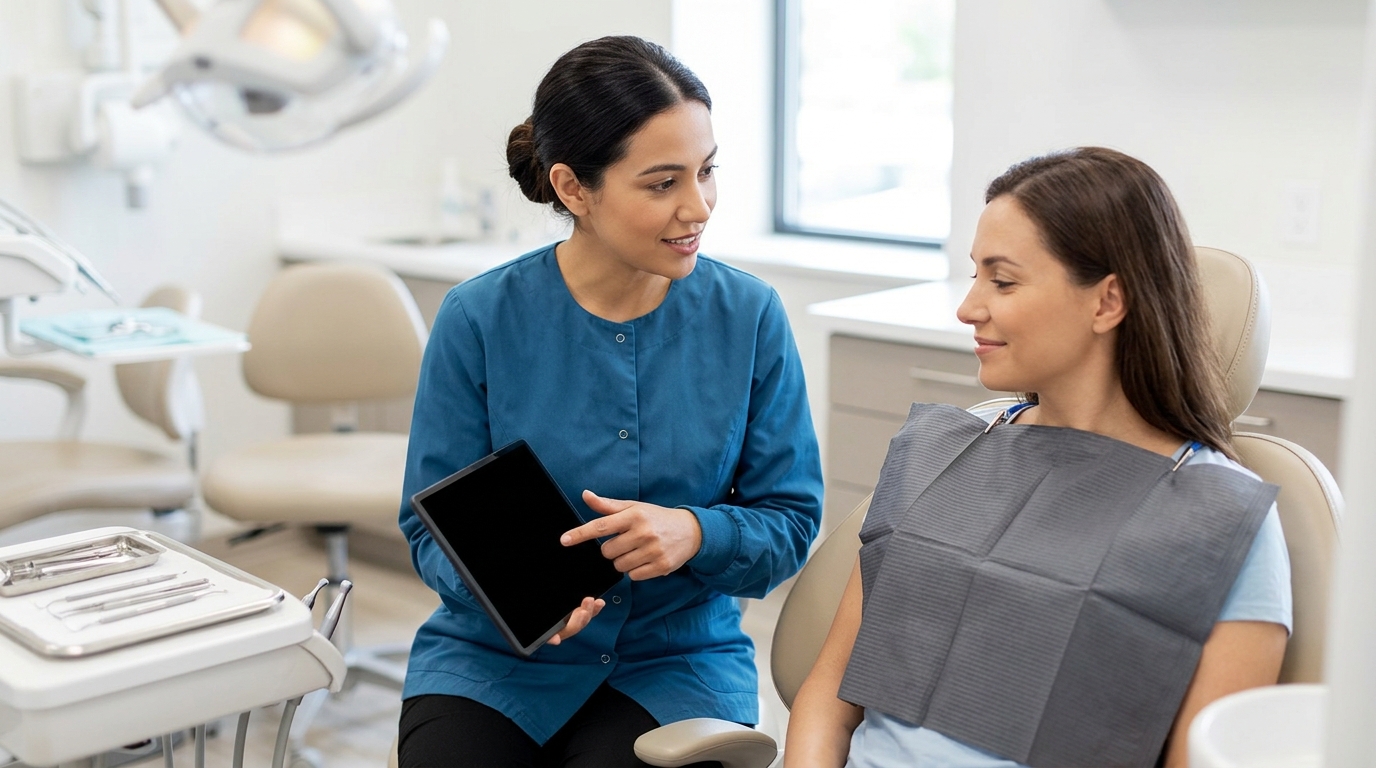
If your goal is a brighter, more even smile, several approaches preserve far more of your natural tooth. The right choice depends entirely on your individual mouth, so treat the options below as a conversation starter with your dentist rather than a recommendation for your specific case.
Composite bonding
Tooth-coloured resin is sculpted directly onto the teeth to reshape edges, close small gaps, or mask minor chips. It is typically additive, meaning little or no natural tooth is removed, and it can often be adjusted or repaired over time.
Minimal-prep porcelain veneers
When bonding is not enough, thin porcelain veneers can transform colour and shape while conserving as much enamel as possible. Careful planning and a skilled ceramist are what make these look natural rather than flat and opaque.
Clear aligners and orthodontics
Many people who ask about veneers actually want straighter teeth. Aligning the teeth first can improve appearance without covering them at all, and it often reduces how much cosmetic work, if any, is needed afterwards.
Professional whitening
If your teeth are healthy but simply darker than you would like, dentist-supervised whitening can lighten the natural shade without altering the tooth structure. It remains one of the least invasive cosmetic options available.
How do you choose a dentist responsibly, in Turkey or anywhere?
Responsible care is defined by the clinician and the treatment plan, not by a postcode. Whether you stay local or consider treatment abroad, the same standards apply. A thoughtful, multidisciplinary clinic will usually:
- Take time to examine your teeth, gums, and bite before recommending anything.
- Explain why a particular treatment is suggested, and describe the less invasive alternatives.
- Be transparent about what is reversible and what is permanent.
- Provide clear records, radiographs, and a written treatment plan.
- Offer realistic timelines and structured aftercare, not a rushed, one-visit makeover.
If you are weighing up treatment overseas, our guide to dental tourism sets out the questions worth asking long before you travel.
Is a natural-looking smile makeover still possible?
Absolutely. A well-designed smile should suit your face, age, and personality rather than simply copy the brightest shade available. Modern smile design brings together cosmetic, orthodontic, and restorative expertise so that any changes stay as conservative as possible while still meeting your goals.
The real lesson behind the “turkey teeth” trend is not “avoid Turkey” or “avoid cosmetic dentistry.” It is to prioritise careful diagnosis, honest advice, and treatments that respect your natural teeth. When in doubt, seek a second opinion and consult a qualified dentist who is willing to explain every step before anything is filed, drilled, or fitted.
Frequently Asked Questions
Is “turkey teeth” a real dental procedure?
No. “Turkey teeth” is a slang term, not a clinical procedure. It usually describes a smile makeover in which healthy teeth are heavily filed down and covered with crowns, often marketed as veneers. Ask your dentist exactly which treatment is being proposed and how much natural tooth it removes.
What is the difference between veneers and crowns?
Veneers are thin shells bonded to the front of a tooth and usually need only minimal reshaping. Crowns cover the whole tooth and require significant removal of natural tooth structure. Crowns are ideal for damaged teeth but far more invasive when used purely for appearance.
Are crowns always a bad choice?
Not at all. Crowns are a trusted, protective treatment for teeth that are broken, root-treated, or too weak to support a filling. The concern with the “turkey teeth” trend is fitting crowns on perfectly healthy teeth for cosmetic reasons alone.
What are the safer alternatives to “turkey teeth”?
Depending on your needs, options such as composite bonding, minimal-prep porcelain veneers, clear aligners, or professional whitening can improve your smile while preserving more natural tooth. Your dentist can assess which, if any, is suitable for you.
Is it safe to get dental treatment in Turkey?
Quality varies by clinic, not by country. Safe, high-standard dentistry exists in Turkey and around the world. Look for thorough examinations, transparent treatment plans, proper records, and conservative recommendations rather than a one-visit transformation.
Can filed-down teeth be reversed?
Enamel does not grow back, so significant tooth reduction is permanent. Existing crowns can be replaced or refined, but the underlying tooth cannot be returned to its original form, which is exactly why careful planning before any irreversible work matters so much.