
No-prep veneers may suit people who want to improve minor cosmetic concerns while preserving as much natural tooth structure as possible. They are ultra-thin restorations bonded to the front of selected teeth. They can be a good option in the right case, but they may not cover more pronounced colour, alignment or tooth-structure concerns.
A dental assessment is needed to decide whether a no-prep approach, a conventional veneer or another treatment is the most suitable option for your teeth, gums and bite.
What are no-prep veneers?
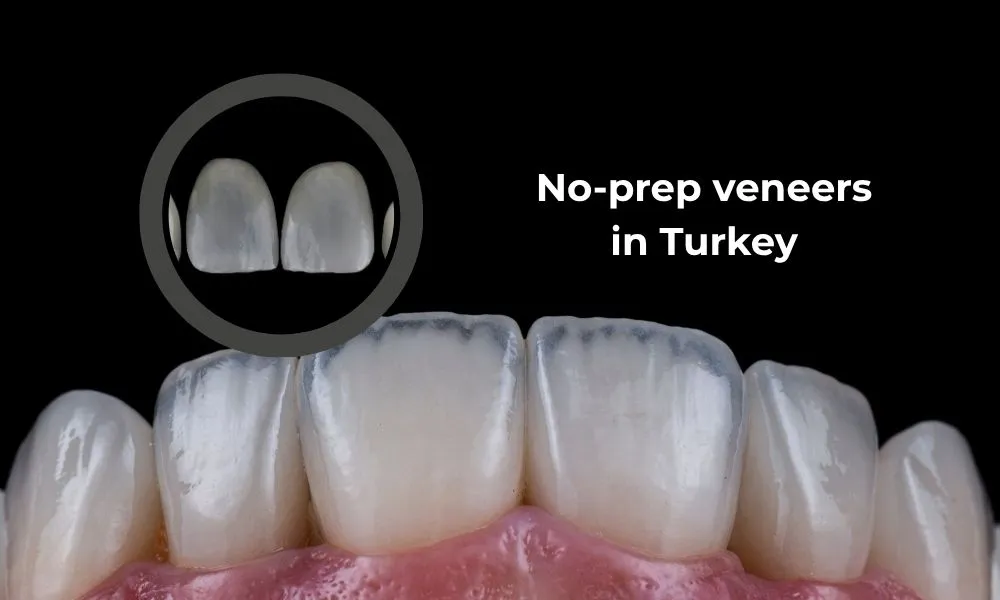
No-prep veneers are ultra-thin veneers bonded to natural teeth with a dental adhesive. The aim is to add a thin restoration with little or no enamel preparation, depending on the individual treatment plan. This can make them an appealing option for people who want a conservative cosmetic change.
“No-prep” does not mean the same approach is suitable for every tooth or every smile. The final plan should be based on the space available, the condition of the teeth and gums, the bite and the change you want to achieve.
No-prep veneers vs conventional veneers
Conventional veneers, including Emax veneers and laminate veneers, may involve enamel reduction so the restoration can fit naturally and address a wider range of cosmetic concerns.
No-prep veneers are thinner and are bonded over the existing enamel when the case is suitable. Because there is less room to mask major colour changes, wear or alignment differences, they may be less suitable where more coverage or a larger shape correction is required.
Who may be a candidate for no-prep veneers?
No-prep veneers are often considered for mild cosmetic concerns, such as small shape differences, minor chips or limited colour variation. They may be appropriate when the teeth and gums are healthy and there is enough room to add a thin veneer without making the teeth look bulky.
They may be less suitable when teeth are severely worn or damaged, when colour changes are difficult to mask, or when more significant alignment changes are required. In those situations, a dentist may discuss alternatives such as Emax or porcelain veneers, depending on the clinical findings.
Benefits to consider
- Conservative approach: the treatment plan may preserve more natural enamel than a conventional veneer plan.
- Natural appearance: the ultra-thin design can support a subtle change when there is enough space and the underlying teeth are suitable.
- Customisable result: shade and shape are planned around the individual smile and treatment goals.
- Shorter preparation stage: when no enamel reduction is needed, the preparation process can be simpler.
Limitations and trade-offs
- Not every concern can be concealed: ultra-thin veneers may not fully mask dark staining, marked wear or larger shape and alignment differences.
- Fit matters: an unsuitable no-prep plan can make teeth look too prominent, so space and bite must be assessed carefully.
- They still need care: veneers can chip or crack and should not be used to bite hard objects.
- Future treatment may still be needed: veneers may require repair or replacement over time.
How long do no-prep veneers last?
Longevity depends on the material, the treatment plan, bite forces and daily care. Porcelain veneers are commonly selected for their durable, smooth surface. Regular dental care and avoiding habits such as biting hard objects can help protect the veneers.
If a veneer chips, cracks or no longer fits as intended, a dentist can assess whether repair or replacement is appropriate. Your treatment plan should include a discussion of maintenance and future replacement considerations.
Does treatment hurt?
When a no-prep plan does not require enamel reduction, the preparation stage may be more comfortable for some patients. Your dentist can explain whether anaesthesia is expected in your particular case and what to expect during each appointment.
Choosing the shade and shape
The shade and shape of the veneers are planned with the dentist to suit your facial features, existing teeth and goals. Your clinic may use photographs, scans or other planning tools to help you review the proposed result before treatment.
Care after no-prep veneers
Care is similar to caring for natural teeth: brush twice daily with a soft toothbrush, clean between the teeth as advised by your dental team and attend regular dental check-ups. Avoid biting very hard foods or non-food objects. If you clench or grind your teeth, ask whether a protective night guard is appropriate.
Talk through the right veneer option for you
The best choice depends on what you want to change and what your teeth can support. Review the clinic’s current price information and request a personalised assessment through the contact page.
Medical information notice: This article is for general information and does not replace a dental examination, diagnosis or personalised treatment advice.