Unique Smile Turkey




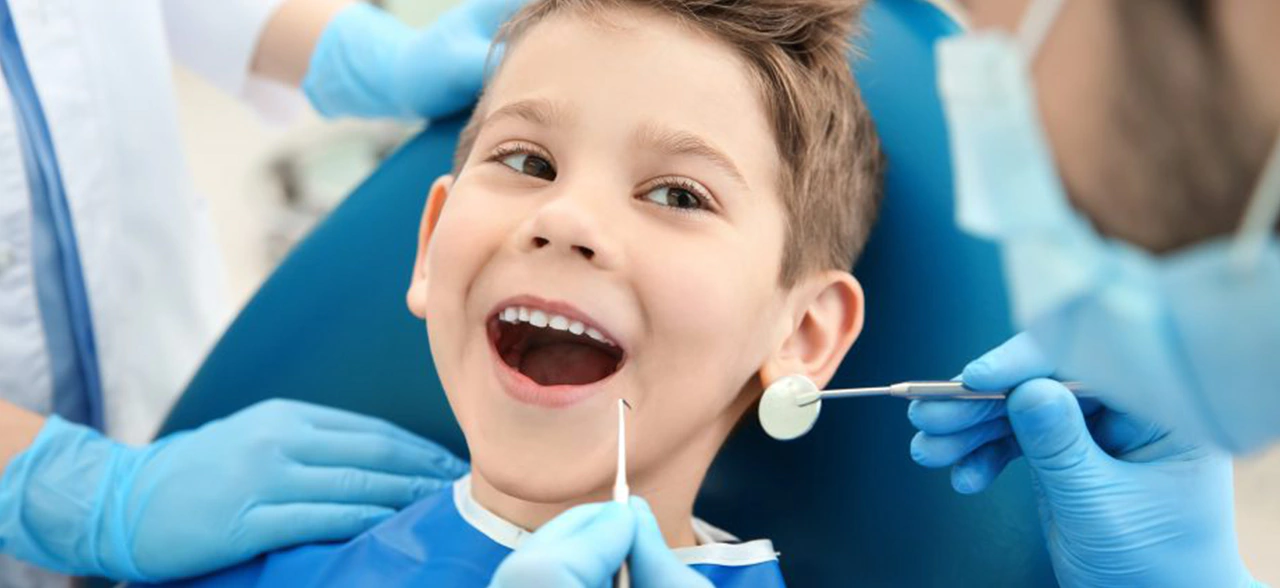
Children's teeth are not small adult teeth. Enamel is thinner, decay travels faster, and the jaw is still growing while the permanent teeth are on their way. Most of what a child needs from a dentist is prevention and a calm first experience; the rest is treating problems early, while they are still small.
Child dentistry at Unique Smile Turkey covers examinations, cleaning, fluoride application, fissure sealants, fillings, treatment of dental injuries and advice for parents. Our dentists are experienced in treating children, and appointments are arranged so a child is not rushed.
The earlier the first visit happens, the easier every visit afterwards tends to be. A first appointment is usually a look, a count, a polish and a conversation — nothing that hurts, so the child learns that a dental chair is not a threat. If something does need treating, it is explained to the child in their own terms before anything is done.
Sealants and fluoride are quick, painless and do more to keep a child out of the treatment chair than anything that happens once decay has started.
A common assumption is that decay in a baby tooth can be ignored because the tooth will fall out anyway. It cannot. Baby teeth hold the space for the permanent teeth behind them, and an infected baby tooth can damage the developing tooth underneath, cause pain and disturbed sleep, and lead to the space closing so the permanent tooth erupts crowded or out of line.
Fillings for early decay, pulp treatment where decay has reached the nerve of a baby tooth, stainless steel or aesthetic crowns on badly broken back teeth, extraction where a tooth cannot be saved, and space maintainers where a baby tooth has been lost early. Injuries to front teeth after a fall are handled as urgent cases, because what happens in the first hours affects the outcome.
Between roughly six and twelve years old, baby teeth are replaced in a fairly predictable order, and the way the new teeth come through says a lot about how the bite is developing. Crowding, an overbite or a crossbite spotted at this stage can be monitored and referred at the right moment rather than discovered later. Habits such as prolonged thumb sucking are worth raising during a check-up.
Fear of the dentist is usually learned, often from an adult. Appointments are kept short, the child is shown each instrument before it is used, and treatment is staged so nothing is forced in a first session. Parents help most by staying relaxed and avoiding words like pain and injection in the waiting room.
Families who come to Antalya for a parent's treatment often ask whether the children can be seen at the same time. They can: a check-up, cleaning, fluoride or sealants fit easily around another appointment. Dental emergencies during a holiday — a knocked-out tooth in a pool, a broken front tooth, a sudden toothache — are also seen, and it is worth contacting us the same day rather than waiting until you are home. Get in touch through our contact page.
If a knocked-out permanent tooth is involved, keep it in milk, do not scrub the root, and seek dental care immediately; time matters more than distance in that situation.
Bleeding gums are not normal at any age. In teenagers, hormonal changes and braces both make plaque control harder, and gum inflammation that is ignored can carry on into adult life. Our periodontal treatment page explains what that inflammation is and how it is treated.
Book an appointment if your child complains of toothache, if you can see a dark spot or a hole in a tooth, if the gums bleed when brushing, if a tooth has been broken or knocked out, or if a permanent tooth is coming through in an unusual position. This page is general information for parents and does not replace an examination.
When should a child first see a dentist?
Guidance in most countries is around the first birthday, or within six months of the first tooth appearing. The aim of that first visit is familiarity and prevention advice rather than treatment.
Are fillings in baby teeth really necessary?
Yes, when decay is active. An untreated baby tooth can become infected, cause pain, affect the permanent tooth developing underneath and lead to space loss that crowds the adult teeth.
Are dental X-rays safe for children?
Dental radiographs use a very low dose and are taken only when they change what will be done, for example to check between contacting back teeth or to see a developing tooth. Protective measures are used as standard.
At what age do children get their permanent teeth?
The first permanent molars and lower front teeth usually appear around six years old, and most permanent teeth other than wisdom teeth are through by about twelve. The order varies more than the timing.
Can my child be treated while we are on holiday in Antalya?
Yes. Check-ups, cleaning, sealants and fluoride fit easily into a stay, and emergencies such as a broken or knocked-out tooth are seen as urgent cases. Contact us the same day if an injury happens.
General information for parents. It is not a diagnosis or a treatment recommendation for an individual child; please arrange an examination for any specific concern.