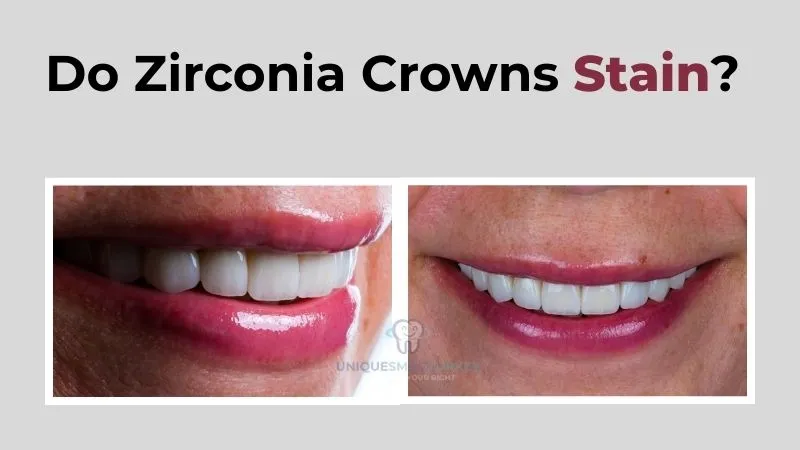
If you are considering having a zirconium crown fitted, or have already had one fitted, you may be wondering, ‘Will this crown stain?’ This is a perfectly normal concern, especially after investing in a restoration designed to last for years. Fortunately, we can put your mind at ease right away: zirconium crowns are quite resistant to staining compared to many other materials. However, let's clarify the issue completely: the zirconium crown itself does not stain, but factors around it can create a stained appearance.

So how does this happen? Zirconium is a type of ceramic used in dentistry and known for its high durability. The secret lies in its structure, which has no pores whatsoever. Your natural teeth and even some other prosthetic materials have microscopic voids that can trap stains from beverages like coffee, tea, or wine. Zirconium, however, has such a dense and compact structure that it does not allow these stain-causing substances to penetrate it. In other words, the material itself is considered virtually ‘stain-resistant.’
Zirconium crowns are known for their durability and aesthetic appeal, but no material is 100% immune to color change (color stability). Factors affecting the color of zirconium are as follows:
The oral cavity is a dynamic environment with hot-cold transitions, acidic foods, and saliva. Zirconium crowns may undergo some changes over the years in this environment.
The mouth is an environment subject to constant heat changes (hot tea, cold ice cream) and moisture. This can cause microscopic changes in the structure of zirconium over the long term. These changes slightly increase the surface roughness of the crown or cause a slight lightening/darkening of its color.
This is the most common and preventable cause. Zirconium crowns, just like your natural teeth, are subject to plaque and tartar buildup. Color pigments from the foods you consume can adhere to these deposits, creating the impression that the crown has changed color.
Stained Foods:
Coffee, tea, cola, red wine, and cigarettes stain the plaque and tartar that accumulates on zirconium crowns very quickly. Even if the crown itself is not stained, these deposits on it cause it to appear stained and dull.
Oral hygiene:
Without regular and proper brushing, these staining substances adhere more easily to the surface and become permanent.
Zirconium crowns undergo delicate processes such as digital design and high-temperature sintering. Minor errors in this process can lead to undesirable results in the crown's color and transparency.
Zirconium achieves its final hardness and translucency by being fired at high temperatures in a furnace. If this process is carried out at too low or too high a temperature, the crown may become excessively opaque (whitish and dull) or translucent, which negatively affects the color of the underlying tooth. The laboratory environment must be extremely clean.
If dust from another material contaminates the zirconium during the milling (cutting) process, white, grey, or yellowish stains may appear on the crown. If the interior of the furnace used to bake the zirconium is not clean, the crown may take on a bluish or greenish tint.
The final color of the crown is not solely dependent on the zirconium itself. Other factors also determine the final appearance.
Surface polish:
During the process, a smooth and shiny layer called polish is applied to zirconium crowns. Over the years, if this layer wears away, the crown may lose its shine and become a more susceptible surface to external stains.
Color of the adhesive (cement):
Zirconium is a semi-transparent material, meaning it allows some light to pass through. Therefore, the color of the adhesive used can affect the final color of the crown. For example, a crown bonded to a dark-colored tooth with a transparent adhesive may show the tooth's dark color. Your dentist will select the most suitable adhesive color for a natural appearance.
Coating thickness and transparency:
If the crown is made thin enough, the color of the underlying tooth will show through more. If it is made too thick, it may appear opaque and excessively white.
There are different types of zirconium available on the market with varying levels of transparency (e.g., high transparency—HT). Your dentist and technician will try to achieve the most natural appearance by selecting the type of zirconium with the transparency best suited to your natural teeth.
The color of your natural tooth or dental metal support structure beneath the crown affects the final color due to the semi-transparent nature of zirconium. A crown placed over a dark-colored tooth may appear dull and lifeless if precautions are not taken.
Smoking causes serious damage not only to general oral health but also to aesthetic dental restorations. When it comes to zirconium crowns, the situation is somewhat nuanced. In short: Smoking cannot directly discolor or stain the material of the zirconium crown, but it can stain all the structures surrounding the crown, making the crown appear stained and completely compromising its aesthetic success.
The effects of smoking on zirconium crowns:
Direct effect:
Zirconium crowns does not have a porous structure like porcelain. It is a dense and hard ceramic. Substances in cigarettes that cause intense staining, such as nicotine and tar, cannot penetrate this dense structure. Therefore, the crown itself does not undergo any direct color change from smoking. This is one of the greatest advantages of zirconium.
Indirect effects:
The dental adhesive at the thin line where veneer meets the gum may have a porous structure. The intense stains from cigarettes, particularly settling along this line, can form a yellow, brown, or blackish line. This causes the edge of the crown to appear stained when viewed from a distance, completely compromising aesthetics.
Smoking increases plaque formation in the mouth and quickly stains this plaque. Zirconium crowns are subject to plaque and tartar buildup just like natural teeth. In a smoker, the plaque that accumulates on the surface of the crown turns into a yellow-brown layer. Even if the person knows that the crown itself is not stained, from the outside it is perceived as a ‘stain.’
Smoking severely stains and yellows the natural teeth next to your crown. Over time, as your natural teeth darken, your zirconium crown retains its color. This results in an uneven, mottled, and unnatural smile. The crown no longer looks harmonious with the other teeth.
Smoking greatly increases the risk of gum disease (periodontitis). The gums begin to recede. This recession exposes the lower edge of the zirconium crown and the adhesive line more. This means that the stained adhesive line mentioned above becomes more visible.
Surface roughness and cleaning difficulties
The thousands of chemicals in cigarette smoke can, over time, wear away the ‘polish’ layer on zirconium or create microscopic roughness on the surface. A rough surface provides a better foundation for stains and plaque to adhere to.
Effective methods you can use to prevent staining:
Use a soft-bristled brush: Hard brushes can cause microscopic scratches on the polished surface of zirconium. These scratches create a surface where stains can adhere. If there are large gaps between the crowns, interdental brushes recommended by your dentist can be effective in cleaning plaque.
Use a non-abrasive toothpaste: Avoid ‘whitening’ or ‘abrasive’ (high abrasion value) toothpastes. These toothpastes, like hard brushes, can scratch the surface. Choose toothpastes that are low in abrasiveness and labelled “soft” or ‘sensitive’ (for sensitive teeth).
Pay attention to the gum line: When brushing, carefully clean the line where the crown meets the gum (cement line). This is the most effective way to prevent staining of the adhesive.
Use dental floss: Daily use of dental floss cleans plaque that accumulates on the sides of the crown and under the gum line. If this plaque is not removed, substances such as tobacco and coffee can quickly stain it, creating dark lines around the edges of the crown. Dental floss eliminates this invisible hazard.
The ‘Water Rinse’ method: Immediately after consuming a staining beverage (coffee, tea, cola, or red wine), rinse your mouth with a glass of water. This simple action helps remove pigments before they adhere to the crown surface or plaque.
Use of a straw: Using a straw, especially with acidic and staining beverages, reduces direct contact between the liquid and the front surface of the teeth, providing a protective effect.
Preference for lactose-containing coffee: Coffees containing milk or cream have less staining potential than pure coffee.
Regular cleaning (scaling): Professional cleaning by your dentist every six months removes tartar and stubborn stains that cannot be removed at home. This cleaning does not damage the polished surface of the crown; on the contrary, it polishes it and makes it more resistant to staining.
Early diagnosis: During check-ups, your dentist can detect and intervene early on if a leak or a small crack begins to form in the adhesive line of the crown. This prevents much larger and more costly problems.
Here are 7 critical signs indicating that a zirconium crown requires professional care:
This is one of the most common and important signs. If a grey, brown, or blackish line appears where the crown meets the gum, there may be two main reasons: The adhesive material may be porous and absorb stains over time.
A microscopic gap has formed between crown and the tooth. Food debris and bacteria accumulate in this gap, causing a stained appearance and even the risk of decay.
If your crown has lost its original shine and vibrancy and now looks chalky rather than glassy, this may be a sign that the surface glaze has worn away. A rough and matt surface attracts stains much more easily.
If the color of your crown has started to look noticeably different from your natural teeth next to it, this may mean that your natural teeth have changed color (e.g., yellowed from coffee/tea). This causes your crown to look ‘old.’
Your tongue is your most sensitive tactile organ. If, when you run your tongue over the crown, you feel a rough, uneven, or jagged surface compared to other teeth, this may indicate:
If food is constantly getting trapped around a crown, this indicates that the contact between the crown and the adjacent tooth has weakened or that a gap is beginning to form under the crown. This is an early warning sign of a situation requiring urgent intervention.
If you experience a new sensitivity to hot or cold in the area where your crown is located, this is a serious warning sign. The most likely cause is exposure of the natural tooth structure (dentin) beneath the crown. This may indicate that the adhesive is leaking, the crown is cracked, or there is gum recession.
Pressure or chewing pain:
If you feel pain when pressing on your crown or when chewing, this may indicate:
Changes in gum health:
If the gums around your crown bleed during brushing or flossing, or if they appear constantly red and swollen, this indicates inflammation (gingivitis) in that area. This is a sign that the edge of the crown is irritating the gums or that plaque is accumulating and cannot be removed.
If the edge of the crown becomes more visible over time, gum recession is occurring. This is both an aesthetic problem (a dark adhesive line becomes visible) and leaves the root surface of the tooth vulnerable.
Zirconium crowns may lose their natural shine or develop micro-scratches on their surface over time and with use. Fortunately, zirconium crowns can be restored to their original shine with professional polishing. This procedure provides an aesthetic and functional renewal without the need to replace the crown.
This is a question dentists often hear, and the answer is clear: no, zirconium crowns cannot be whitened. The reason for this is that the basic working principles of teeth whitening and zirconium crowns are completely different.
The enamel layer on your natural teeth has microscopic pores. Whitening gels (which usually contain hydrogen peroxide or carbamide peroxide) seep into these pores and break down the organic stain molecules that have penetrated the tooth's internal structure. This is a ‘chemical’ process and changes the color of your teeth to lighter tones.
Zirconium is a dense, non-porous ceramic sintered at high temperatures. This is its greatest advantage, as it prevents stains from penetrating. However, it also completely prevents the active ingredients in the whitening gel from seeping in. The color of the zirconium crown is permanently fixed by mixing it into the paste during the manufacturing process. This is a ‘physical’ color and cannot be altered by chemicals. When the whitening gel comes into contact with the zirconium surface, it has no effect, much like spraying water on a mirror.
If your crown appears stained or dull, this is usually due to deposits on the surface rather than the color of the crown itself. In this case, whitening is not the solution; other solutions are applied:
Professional cleaning:A professional cleaning performed by your dentist can restore the crown's original shine by removing plaque, tartar, and surface stains.
Professional polishing: If the polished surface of the crown has become worn and rough, the dentist can use special tools to smooth and polish the surface again. This makes it more difficult for stains to adhere.
Crown replacement:If the color mismatch is very noticeable or there is another problem with the crown, the only permanent solution is to replace the crown.