
If you are considering having dental veneers fitted, you will naturally be curious about how long they will last. Modern dental treatments combine a natural appearance with a long lifespan. Porcelain, E-max and laminate veneers all provide an aesthetic appearance. However, their lifespan varies depending on the material used in the treatment. That said, on average, dental veneers have a lifespan of 10–15 years. The lifespan increases with the durability of the material. It is also worth noting that maintenance is one of the factors affecting the lifespan of the treatment.
In this article, you will read about the lifespan of different types of dental veneers and tips on how to extend this period.
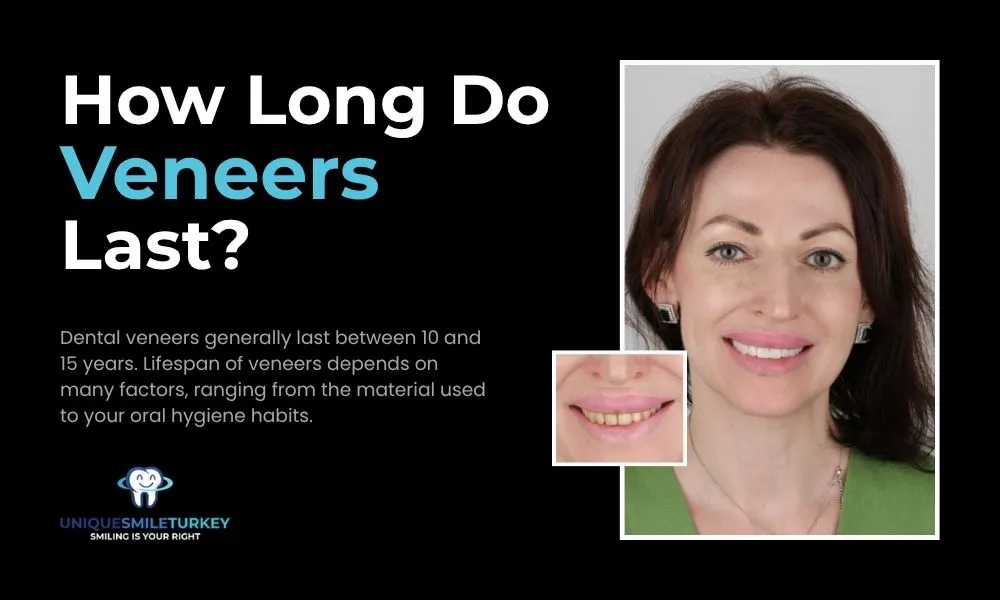
How long do dental veneers last, depending on their type?
1. Laminate veneers
Laminate veneers can last for over ten years. These veneers are ideal for teeth with minor imperfections. If you have gaps between your teeth or small teeth, but your teeth are otherwise healthy, laminate veneers can last for many years.
2. Porcelain veneers
Porcelain veneers can also last for over ten years. With proper treatment planning and bonding procedures, porcelain laminate veneers demonstrate a survival rate of approximately 93.5% over a 10-year period. Porcelain veneers are more durable than laminate veneers and require more tooth reduction. Porcelain veneers are suitable for teeth that have undergone veneer or filling treatment. In cases of bruxism or excessive jaw force, porcelain veneers may be preferred.
3. E-max veneers
E-max veneers are made from lithium disilicate glass-ceramics. This material is preferred because it is both durable and has a light transmission very similar to that of natural tooth enamel.
Aesthetics and strength: E-max has a much higher fracture resistance than traditional porcelain and is typically produced by being pressed under heat using the IPS e. max press method or digitally via CAD/CAM systems. E-max veneers have a lifespan of 20 years or more.
Thin structure: As it is highly durable, it can be prepared very thinly, which minimizes the amount of tooth structure that needs to be removed (minimally invasive).
4. Composite veneers
Composite veneers offer a more cost-effective and quicker alternative to porcelain veneers. They are usually applied directly in the mouth by the dentist. In most cases, the procedure can be completed in a single appointment with little or no tooth reduction. If a composite veneer breaks, cracks, or discolours, it can be easily repaired in the mouth.
Composite veneers have a lifespan of 6–7 years. Composite resin has a more porous structure than porcelain. Consequently, over time, it may discolour due to external factors such as tea, coffee, or smoking. It is also not as durable as porcelain and may need to be replaced more frequently. Furthermore, it is not as resistant to chewing forces as porcelain.
Tips for using dental veneers for many years
Your new smile is a significant investment, and it is largely up to you to ensure it lasts as long as possible.
Habits such as biting pens, biting your nails, or chewing on hard objects like ice can cause cracks or debonding in your veneers.
If you suffer from teeth grinding or clenching (bruxism), you must wear a protective mouthguard at night to prevent the veneers from breaking.
Veneers do not decay, but the underlying tooth structure can. Regular brushing and flossing prevent the build-up of bacterial plaque along the edges of the restorations and help prevent gum recession.
Avoid toothpastes with a high abrasive content (granulated). These types of toothpaste can scratch the glaze layer on the porcelain, causing it to stain more easily over time.
Visit your dentist at least twice a year. The condition of the veneer edges and the integrity of the adhesive (cement) should be checked during a professional examination.
FAQ
What damages teeth and veneers the most?
The main threat to natural teeth and veneers is the same: tooth decay and gum disease that can break down the basic structure of the tooth. However, parafunctional behaviors are generally the most harmful force, mechanically speaking.