Unique Smile Turkey




When a dental crown falls off, exposing a black tooth, this generally results from secondary decay destroying the supporting structures below or from a necrotic pulp (dead nerve) causing a discoloration of the dentin from the inside out. More times than not, the adhesive cement has simply washed out of the space between the crown and the tooth with time, breaking the seal and providing bacteria an opportunity to invade the tooth and turn it soft and black. On the other hand, the color change could also represent a harmless, permanent stain created by corrosion of old silver amalgam fillings or metal posts that were used in previous treatments. This combination of both biological and mechanical failures of the cement to create a solid base for retention leads to the crown being displaced.
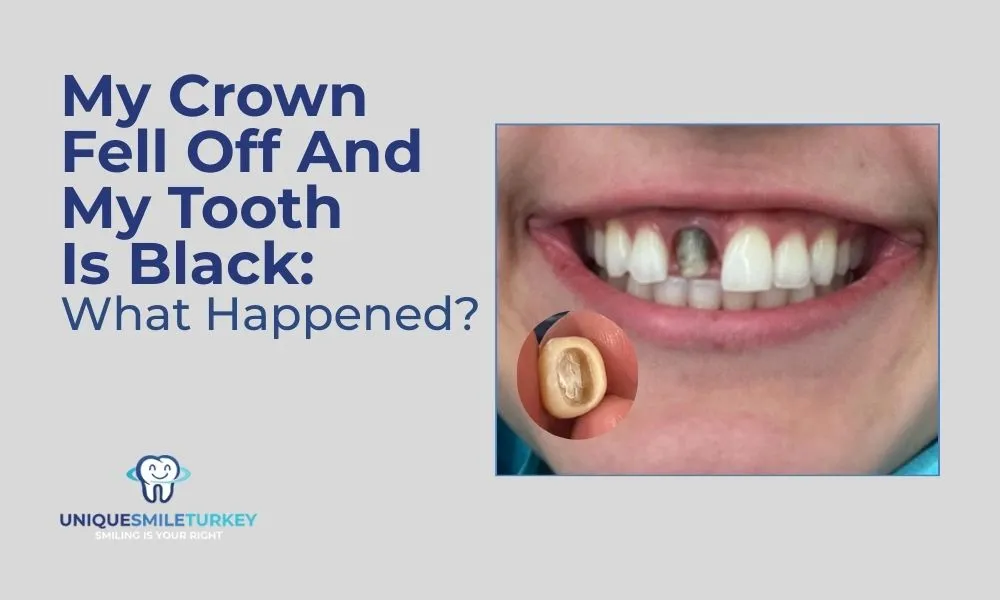
Crowns are among the strongest restorations available today due to their durability and ability to withstand the tremendous forces of mastication for many years. However, crowns are not indestructible. While a crown may break loose, it does not occur randomly. Rather, it occurs as a result of a long, slow process that has occurred over a period of months or possibly years. Identifying how the bond was lost is key to correcting it.
The most common reason for a crown to break loose is the deterioration of the cement used to retain it. Dentists refer to the cement that holds a crown in place as luting cement. Cement is similar to the mortar that is placed between bricks to hold them together. Through a variety of mechanisms including the dissolution of the cement by water and temperature changes of the mouth (hot coffee and cold ice cream), the cement that holds the crown in place deteriorates over time. Some older cements have a problem called "wash-out". When there is a small gap at the margin of the crown, saliva can enter the space and contain enzymes that will slowly consume the cement that retains the crown. As enough cement washes out, the crown no longer fits securely on the tooth and ultimately breaks loose.
Failure of the cement is not always a biological issue but rather the end result of a biological issue that has developed in the tooth itself. Although the crown is artificial and cannot develop a cavity, the tooth underneath the crown is living tissue and is subject to the same problems of decay as any other part of the mouth. There are several ways that decay can form under a crown. For example, poor oral hygiene or improper adaptation of the crown to the gingival margin allows bacteria to enter under the crown and begin feeding on sugars producing acid. Since the crown covers the tooth, decay develops without visual evidence of the formation of the decay. The acid produced by the bacteria continues to wear away the tooth structure creating cavities until the tooth becomes soft and weak and can no longer support the crown. It's like building a house on a foundation that has become mud; eventually the house will slide off the mud because the foundation has given way.
There are two types of forces that can cause a crown to fail mechanically. The first type of force is traumatic. Examples include biting down on an unpopped popcorn kernel, a piece of ice, or a hard candy. This type of force can break the cement seal holding the crown in place instantly. The second type of force is chronic. Grinding of the teeth during sleep (bruxism) causes chronic motion of the crown. The cement seal is subjected to constant vibrations that gradually weaken the seal. Eventually the seal is completely disrupted and the crown is dislodged. The analogy here is similar to the vibration of a fence post back and forth each night. Eventually, the soil around the post becomes unstable and the post falls over. A crown experiences the same effect as a result of grinding the teeth. The continuous vibration of the crown eventually disrupts the cement layer and the crown is dislodged.
The presence of a black spot where your white crown once was is alarming and frightening, but does not automatically indicate that the tooth is beyond saving.
There are three primary causes of this discoloration; each ranges from an acute infection to benign staining.
If the blackening of the tooth is accompanied by a foul odor and/or mushiness to the tooth, it is probable that there is extensive decay. Bacteria residing in the confined, oxygen-poor environment underneath a crown produce dark-colored by-products during the digestion of organic matter. Additionally, when the dentin (layer of tooth below enamel) decomposes/rots, it becomes a brownish/black color due to decomposition.
Decay of this nature is the most serious of the three possible causes since it compromises the structural integrity of the tooth. If you press on the tooth and feel it is soft and/or leathery, as opposed to feeling the hardness of a rock, the black area is infected tooth structure which needs to be removed. The greater the darkness of the color, generally, the longer it has existed.
At times, the tooth is discolored due to what happened on the inside rather than what occurred on the outside. If the tooth received some type of trauma many years ago, or if the cavity was so deep that it killed the nerve, the tissue inside the pulp chamber will die. When the blood supply to the inside of a tooth is severed, the red blood cells break apart.
As the red blood cells degenerate, they release iron. Iron reacts with other substances to create a black pigment called iron sulfide. This pigment then seeps into the porous internal structures of the tooth and stains them from the inside outward. This often indicates the nerve is dead and the tooth may require a root canal if one has not previously been performed.
Not all black is decay. In many instances, especially when dealing with older dental work, the black coloration is nothing more than a stain created from past materials. If you had a "silver" filling (amalgam) utilized to build-up the tooth core prior to placing the crown, the metals contained within that filling (silver, tin and copper) could corrode slightly over time.
These corrosion products leak dark-gray or black silver ions into the tooth structure. They are akin to tattoos for the tooth. The tooth is solid, free of bacteria, and healthy but has been permanently stained black. Similar to this, if a metal post was inserted into the root to provide support for the crown, the metal will appear as a dark, shadowy line through the tooth. While aesthetically unappealing, this is not a disease.
Yes, and this is by far the most prevalent and often the healthiest. It is important to realize that natural teeth are not uniformly white throughout. The outer layer (enamel) of the tooth is white while the inner layer (dentin) is naturally either yellow or darker yellow-brown.
When a dentist is preparing a tooth for a crown, he/she has to remove some of the enamel to accommodate the porcelain. This allows for exposure of the dentin. Therefore, viewing a tooth without a crown is essentially viewing this yellow inner layer. As we age, the dentin will darken and become more yellow.
You may also notice brown spots. If these spots are firm/hard and shiny, they are probably "arrested decay." This means that a cavity began forming many years ago but it stopped. It left a brown scar on the tooth but it is otherwise healthy. However, if the brown areas are soft/matte, that is active decay. In general, a yellow or light brown tooth is a better indicator of health than a black one.
If pain or throbbing is experienced after a crown has fallen out, an infection may have developed. Therefore, it is advisable to see a dentist as soon as possible.
If there are no such complaints but only sensitivity, it is not an emergency. However, tooth enamel is quite vulnerable in this state and prone to decay. Therefore, you should see a dentist without delay.
Your tooth is extremely vulnerable once the crown falls off. That tooth is now exposed and does not have its protective enamel armor. To help minimize damage and prevent further issues until you see us, follow these tips:
Find the crown: Don't throw it away! Even if you feel like it's broken beyond repair, bring it with you. We can try to clean it up and place it back on, possibly saving you money in a new crown.
Clean it: Gently brush the tooth. There may be some bleeding and/or sensitivity to brushing and flossing, but you need to remove the plaque to allow food to not act as fuel for bacteria. A tooth left uncovered decays much quicker than a tooth with protective enamel.
Rinse with saltwater: Saltwater helps soothe and disinfect the gum area. Simply mix a teaspoon of salt in a cup of warm water and gently swish it around the affected area.
Do not eat on that side: Please avoid chewing on the side where the crown was lost. The remaining tooth stump is usually very thin and brittle. Biting into something hard may cause the tooth to split, which will make the tooth unsaveable and you will have to pull it.
Temperatures: Avoid drinking cold water/ice and eating piping hot foods/soups. Extreme temperatures may shock the exposed tooth causing extreme sensitivity.
You have a short amount of time. Generally, it is best to visit a dentist within 2-4 days.
Here is why time is important: Teeth are not fixed in place, and can move. When a crown is removed, the surrounding teeth and the opposing tooth (the tooth you bite against) will begin to drift into the space created. This can occur rapidly. If you wait for several weeks, your teeth may have shifted so significantly that the crown will no longer fit.
Lastly, the soft dentin of the exposed tooth is highly susceptible to rapid decay. Waiting weeks may convert what is otherwise a simple recementation into a root canal or extraction.
Most people ask this question, and our response is always the same. Yes, you can put your crown back on, but only temporarily, and under NO CIRCUMSTANCES with superglue.
DO NOT USE HOUSEHOLD GLUES (e.g., Crazy Glue, Gorilla Glue): These are toxic. These may scald your gums. Also, once these glues set, we cannot safely remove the crown to clean underneath the crown, and you risk ruining the tooth and the crown for good.
A tooth turning black does not automatically mean the tooth must be extracted. We follow a very specific protocol to determine whether the tooth can be saved.
Removing the soft decay:
First, we remove all the soft, mushy black decay from the tooth. We use dyes to establish exactly where the bacteria stopped and where the healthy tooth began. If we can remove all of the soft decay and still have enough solid tooth structure to create a grip, we can potentially save the tooth.
Root canal treatment:
If the tooth turned black due to a dead nerve or an infection within the tooth, a root canal procedure allows us to clean out the inside of the tooth and halt the infection.
Internal bleaching:
If the tooth is structurally sound, we can perform an "internal bleaching" procedure. We will insert a whitening agent into the tooth for several days, which will lighten the darkened areas prior to placing a new crown.
When extraction is the only option:
We will extract the tooth when the decay extends below the bone level or when the root is cracked vertically. When either of these occurs, the tooth's foundation has been destroyed, and regardless of how much cement we apply or how many crowns we place, we cannot salvage the tooth.